
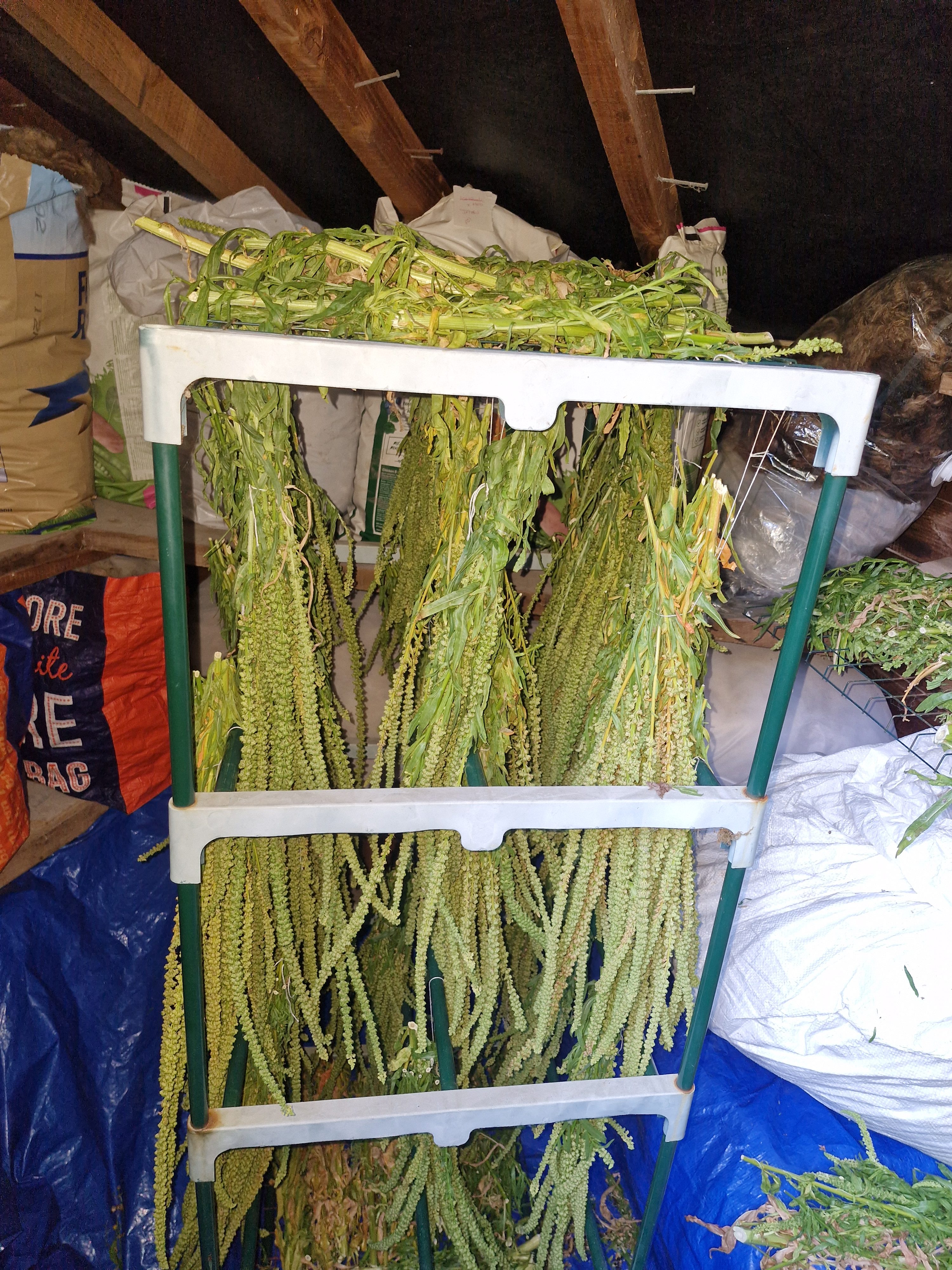
Growing Weld From Seed
Growing Weld from Seed - A direct-sowing and cultivation guide for Reseda Luteola
Weld is a hardy dye plant that usually grows as a biennial: a low rosette in its first year, followed by tall flowering stems in its second. It is well suited to direct sowing because its tiny seeds need light and its taproot dislikes disturbance.
This guide takes you from preparing a seedbed through to flowering, dye harvest and saving seed for the next crop. It is designed for UK gardens and does not require a greenhouse.
BOTANICAL NAME - Reseda Luteola
LIFE CYCLE - Usually Biennial
MAIN SOWING TIME - Autumn - direct to soil
Before You Sow:
The simplest route is to sow weld directly into its final position in autumn. Choose a permanent, clearly marked patch and keep some seed in reserve rather than sowing everything at once.
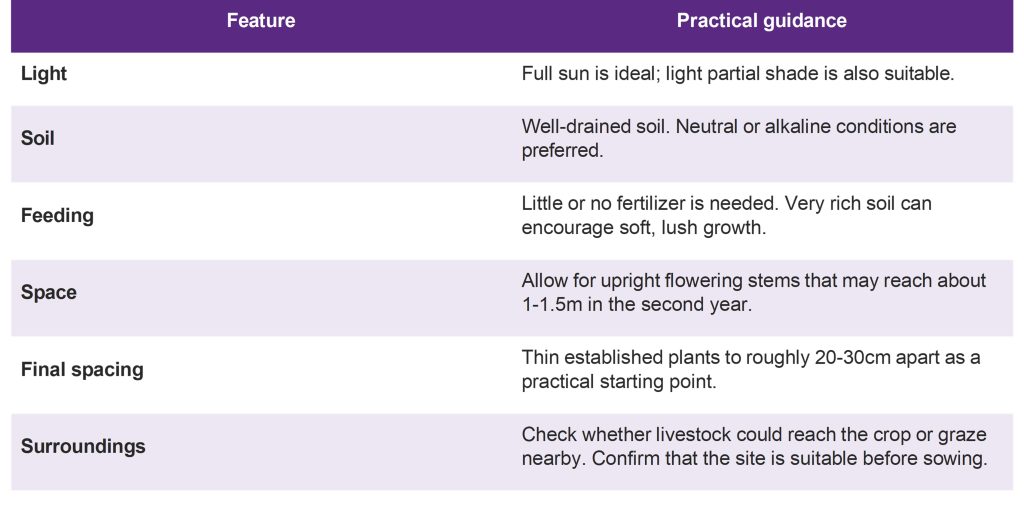
What weld needs:
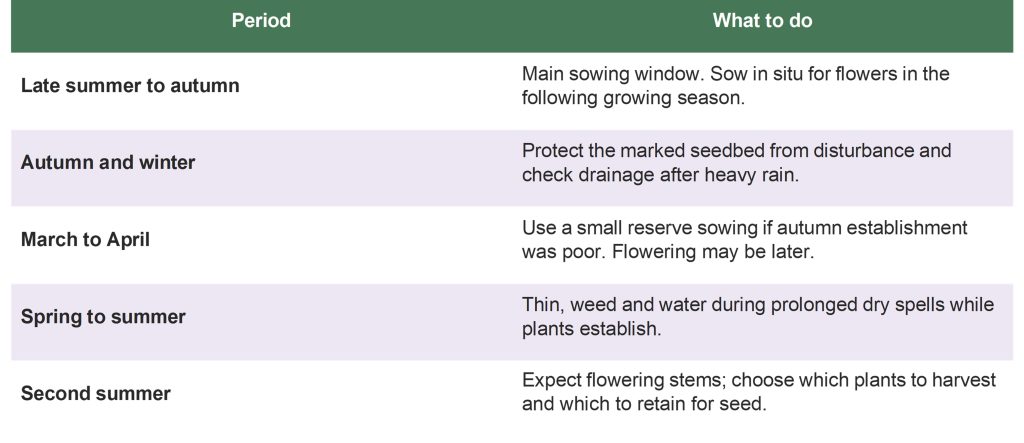
Timing varies with weather and location. This is a practical UK guide, not a guarantee of flowering dates.
If your seed includes chaff:
Shake the closed packet gently before opening. The dry plant chaff helps the very small seeds flow and makes the sown area easier to see. It does not need to be separated before sowing.
The seed-and-chaff mix as supplied. Sow the whole mixture; it does not need to be separated.
Prepare and sow the seedbed:
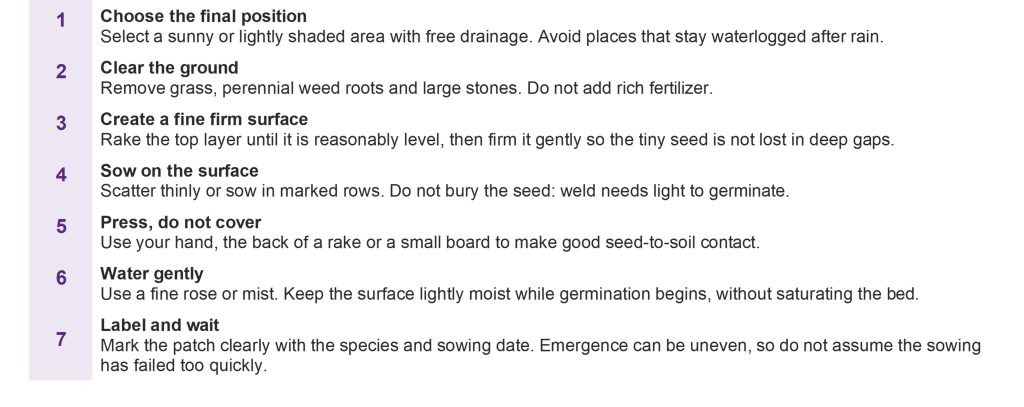
Sowing on a slope:
A gentle slope can provide good drainage, but surface-sown seed may move downhill. Make short, shallow, level bands across the slope. Press the seed firmly, water gently and avoid sowing immediately before heavy rain.
How much should you sow:
Use only enough seed for the prepared area and keep the rest cool, dry and dark as a backup. Sow more closely than the final spacing, then thin once the seedlings are established and easy to identify.

Care through the first year:
Germination and thinning:
- Keep the surface lightly moist during dry weather, but do not leave it saturated.
- Mark genuine weld seedlings before weeding close to them.
- Thin gradually after the seedlings are established, aiming for roughly 20-30cm between plants.
- Remove competing weeds carefully so the developing taproots are not disturbed.
The first-year rosette:
Weld usually spends its first season as a low rosette of long, narrow green leaves. This is normal. Do not expect every autumn-sown plant to produce a flowering stem immediately.
Autumn and winter care:
- Check the bed after prolonged rain and correct any small areas where water pools.
- Keep fallen leaves and dense weed growth from smothering young rosettes.
- In colder parts of the UK, the RHS advises that seedlings may benefit from cloche protection over winter.
- In exposed gardens, use discreet support once second-year stems begin to rise.
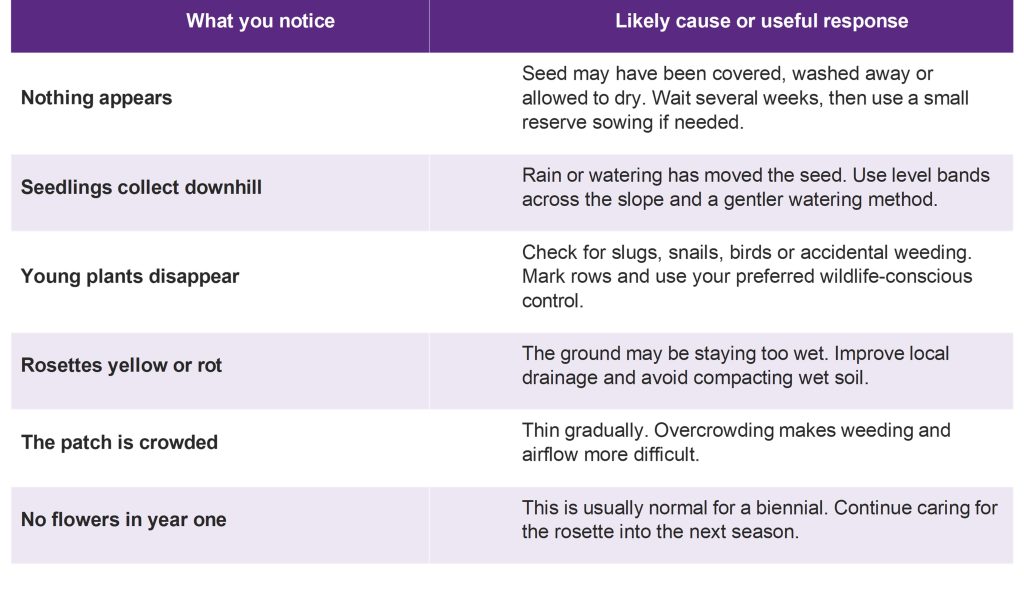
Troubleshooting
Flowering harvest and seed saving
Second-year growth:
Established rosettes normally send up tall, slender flowering stems. The RHS records a mature height of around 1-1.5m. Support stems in exposed positions if they begin to lean and continue to keep the base clear of strong weed competition.
Plan the harvest before cutting:
- Choose some plants for dye material and leave several healthy plants to ripen seed.
- Record the harvest stage. Leaves, stems, flowering tops and developing capsules can be kept separate if you want to compare their dye strength.
- Harvest dry plant material only when you can label and dry it promptly. Discard anything moldy or contaminated.
- Keep a small, labelled sample from each harvest if you plan to compare future crops.
This is a growing guide rather than a dye recipe. Follow a suitable fibre-specific mordanting and dyeing method before using the crop.
Save seed for the next crop:
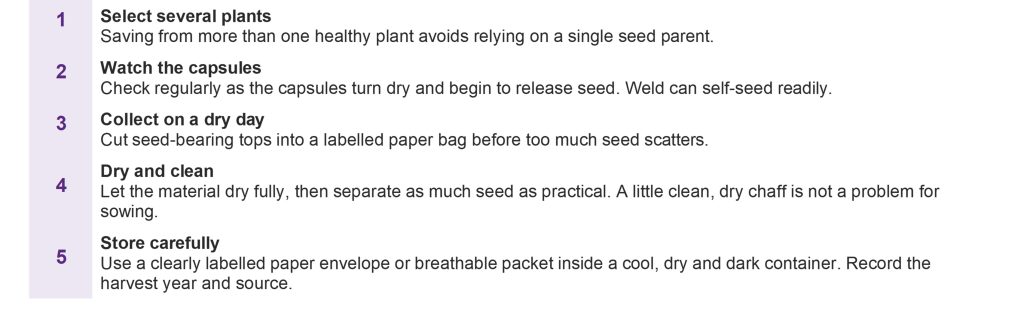
Manage self-seeding:
If you do not want more plants, deadhead before the seed fully ripens. If you want a continuing patch, allow only selected plants to shed seed and remove unwanted seedlings while they are small.
Safety and responsible growing
ADHCrafts weld seed is supplied for sowing and craft use only. It is not sold as food or medicine.
- Do not eat the seed or any part of the plant.
- Keep seed packets and harvested dye material out of reach of children and pets.
- Wash hands after gardening. Wear gloves if your skin is sensitive or if you are handling dusty, dry plant material.
- Correctly identify the plant before harvesting it for dye, especially where other wild plants grow nearby.
- If someone swallows plant material and you are concerned, seek prompt medical or veterinary advice and keep the packet or a sample for identification.
Livestock and site suitability: Before sowing, consider how the surrounding land is used. If livestock graze nearby or could reach the crop, check that the location is suitable with the landowner and, where appropriate, a veterinary professional or livestock adviser. This is a precautionary site check rather than a claim that weld has confirmed livestock toxicity.
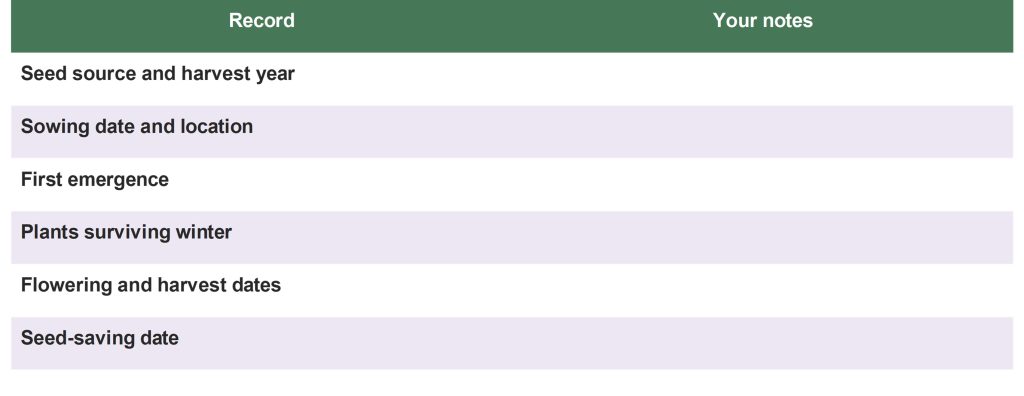
Keep a simple crop records:
Sources and scope:
Cultivation guidance was checked on 22 September 2026 against the Royal Horticultural Society plant profile for Reseda luteola and the North Carolina Extension Gardener Plant Toolbox. General ingestion advice follows NHS poisoning guidance and the RHS principle that non-food garden plants should not be eaten.
RHS plant profile for Reseda luteola
NC State Extension plant profile for Reseda luteola NHS poisoning guidance
This guide gives general cultivation information for home gardeners. Conditions vary by soil, weather and location, so keep some seed in reserve and treat the first crop as a practical trial.