The Neurodivergent Cogitators & Creators
The Neurodivergent Cogitators & Creators
Every fleece is different. Some fibre is perfect for spinning, some is better as batts or felting fibre, and some may be more suitable for stuffing, texture, samples or garden use.
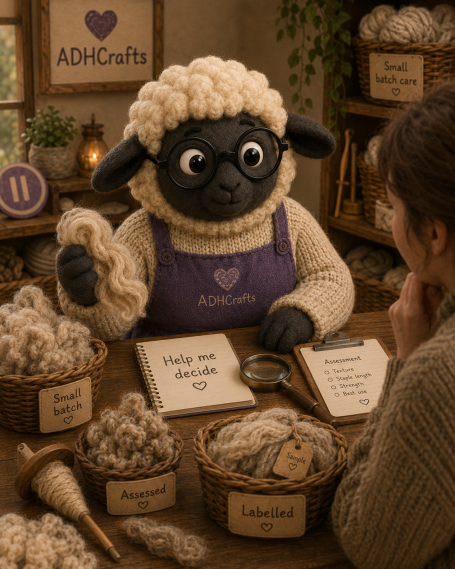
This page explains the main options so you can start to understand what might be possible. You do not need to choose perfectly before getting in touch — the enquiry form includes a “help me decide” option.
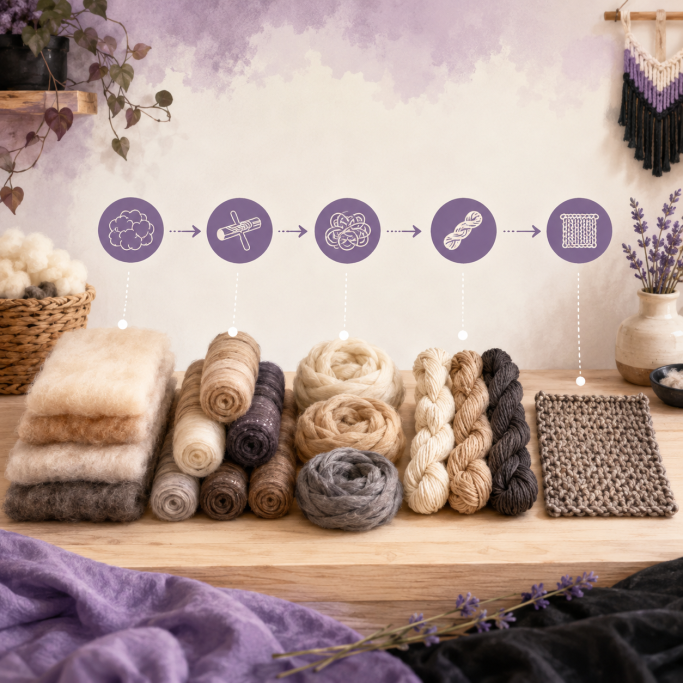
A fleece does not have to be perfect to be useful. The best outcome depends on the fibre’s length, strength, cleanliness, texture and intended use.
Some fleeces are suitable for yarn, while others may be better as carded batts, felting fibre, decorative locks, stuffing or sample projects. If a fleece is not suitable for one use, it may still have value in another.
Washed fibre is cleaned and dried, ready for further preparation. This can suit customers who want to card, spin, felt or experiment with the fibre themselves.
Best for: people who want clean fibre but do not need it fully prepared yet.
Carded batts are sheets of prepared fibre. They can be useful for felting, spinning, blending colours or working with fibre in larger, airy sections.
Best for: felting, spinning, blending and creative fibre work.
A sample is a small test batch used to see how the fibre behaves before committing to a larger project.
Best for: unknown fleeces, new customers, alpaca blends, or fibre where the final result is uncertain.
Rolags are small rolls of carded fibre, usually made using hand carders. They are often used for woollen-style spinning and can make fibre feel more manageable in smaller portions.
Best for: hand spinning and smaller, controlled fibre preparation.
Some fibre is better suited to felting than spinning. Carded batts can be useful for wet felting, needle felting, sculpture work and textured projects.
Best for: felted items, 2D or 3D fibre art, and craft projects.
Roving or sliver is fibre prepared in a longer continuous form. It can be easier for some spinners to draft from, depending on the fibre and preparation method.
Best for: spinning and smoother fibre handling.
Coarser, shorter or mixed fibre may still be useful as stuffing, core wool, texture fibre or craft material.
Best for: toys, sculptures, core felting, stuffing or experimental use.
Suitable fibre can be handspun into yarn. The yarn weight and finish will depend on the fibre, the amount available and what you want to make from it.
Best for: knitting, crochet, weaving, keepsake skeins or special small-batch projects.
Some fibre may be too damp, mouldy, moth-damaged, heavily contaminated, badly felted or too weak to process safely.
Best next step: contact ADHCrafts before sending anything, especially if you are unsure.
The finished project helps decide the best preparation. A fleece for a jumper may need a different route from fibre used for felting, weaving, learning to spin or creating a keepsake skein.
Simple examples
Alpaca fibre behaves differently from sheep wool. It can be beautifully soft and smooth, but may need different handling, blending or expectations depending on fibre quality, guard hair, age, length and intended use.
A full alpaca guide will be added later. For now, you can include alpaca fibre in your enquiry and choose “help me decide” if you are unsure.
The ADHCrafts process starts with an enquiry, not with sending fibre. Your fibre details are reviewed first, then the next step is agreed. If processing goes ahead, your fibre is labelled, assessed and handled as a small-batch project.
This helps keep the process clear, safe and realistic from the beginning.
Either options is completely fine. You do not need to know whether you need batts, roving, yarn or a sample before getting in touch. Choose “help me decide” on the enquiry form and we can work through the options together, or have a read of the 'Fibre Suitability guide'. If you are reading to take the next steps, follow the enquiry form and include as much information as you can. This helps to ensure clear communication and correct pricing and booking.
We need your consent to load the translations
We use a third-party service to translate the website content that may collect data about your activity. Please review the details in the privacy policy and accept the service to view the translations.