The Neurodivergent Cogitators & Creators
The Neurodivergent Cogitators & Creators
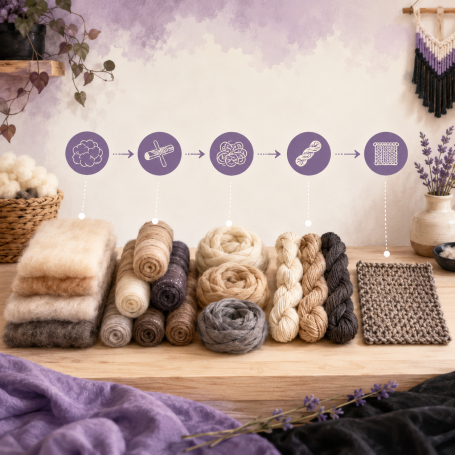
If you know you want to turn your fleece or fibre into something useful, but you are not sure what to ask for, this guide explains the main options.
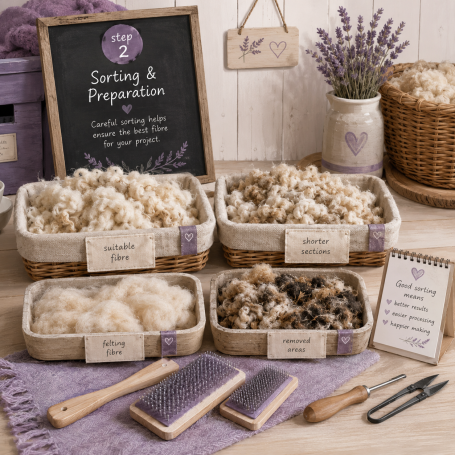
Fibre can be prepared in different ways depending on the animal, breed, fibre condition, staple length, strength, texture and what you would like to make.
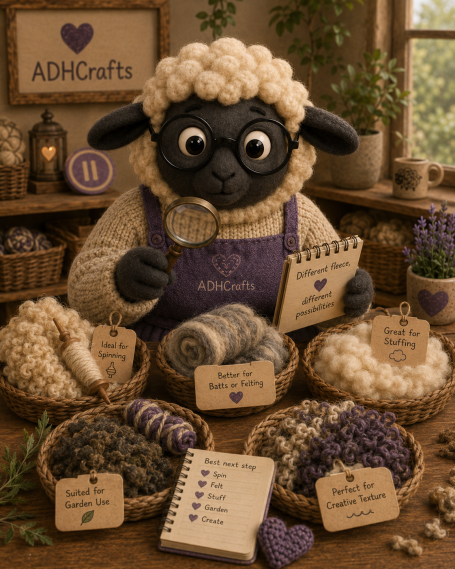
Not every fleece is suitable for every outcome. Some fibre may become beautiful handspun yarn. Some may be better as batts, rolags, roving, felting fibre, stuffing or sample fibre.
The aim is to choose the most useful and realistic form for the fibre you have.
1. Washed Fibre
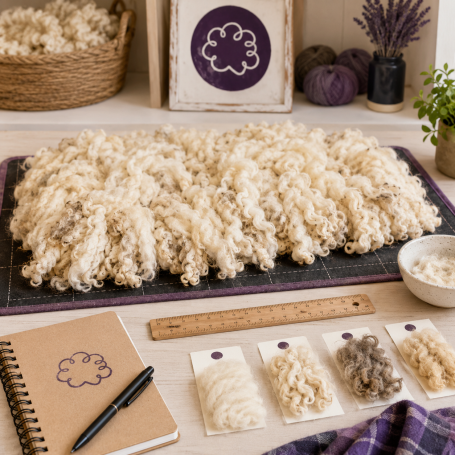
Washed fibre has been cleaned but not fully prepared into batts, rolags, roving or yarn.
This may suit you if you want to:
Washed fibre can still contain some vegetable matter, texture variation or shorter sections, depending on the fleece.
Best for: customers who want cleaned fibre but still want flexibility.
2. Batts
Batts are sheets or layers of carded fibre.
They are often soft, lofty and easy to pull apart. Batts can be used for spinning, felting, blending, colour work, stuffing or craft projects.
Batts may be a good option if the fibre has mixed texture or if you want a flexible preparation that can be used in several ways.
Best for: spinning, felting, blending, textured yarns, creative fibre work and general craft use.
3. Rolags
Rolags are small rolls of carded fibre, often made using hand carders or blending boards.
They are commonly used for woollen-style spinning and can create a light, airy yarn with texture and character.
Rolags can be especially useful for hand spinning on a spindle or wheel, depending on the fibre.
Best for: hand spinning, textured yarn, woollen-style yarn and smaller-batch fibre preparation.
4. Roving or Sliver
Roving or sliver is fibre prepared into a longer continuous length.
It is often easier for beginners to recognise because it looks like a long rope or strip of prepared fibre.
Depending on the fibre and equipment used, roving or sliver may be smoother and more aligned than batts or rolags. It can be useful for spinning, felting, needle felting or learning fibre handling.
Best for: spinning, needle felting, wet felting, beginner-friendly fibre handling and smooth preparation where suitable.
5. Handspun Yarn
Handspun yarn is fibre that has been prepared and spun into yarn by hand.
This is often the most finished option, but it is also the most time-intensive.
The final yarn depends on:
Handspun yarn may be suitable if you want to knit, crochet, weave, display or keep a finished yarn made from your own animal or flock.
Best for: customers who want a finished yarn with provenance, character and a clear link back to their animal or flock.
6. Sample Processing
Sample processing is a small test before committing to a larger project.
A sample may show:
Sample processing is especially useful for older fleece, sentimental fibre, rare breed fleece, alpaca, mixed bags, or fibre where the condition is uncertain.
Best for: reducing risk before a larger project.
7. Felting Fibre
Felting fibre is fibre prepared for needle felting, wet felting or other felted projects.
Some fibre that is not ideal for soft yarn may still be very useful for felting.
Felting fibre may suit:
Best for: fibre that has texture, character or mixed quality but is still clean and usable.
8. Stuffing or Craft Fibre
Some fibre may not be suitable for yarn or fine preparation, but may still be useful.
Stuffing or craft fibre may be suitable for:
This can be a good option when the fleece has sentimental value but is not suitable for spinning.
Best for: making use of fibre that may not meet yarn or fine craft requirements.
9. How to Choose the Best Option
A good starting point is to ask:
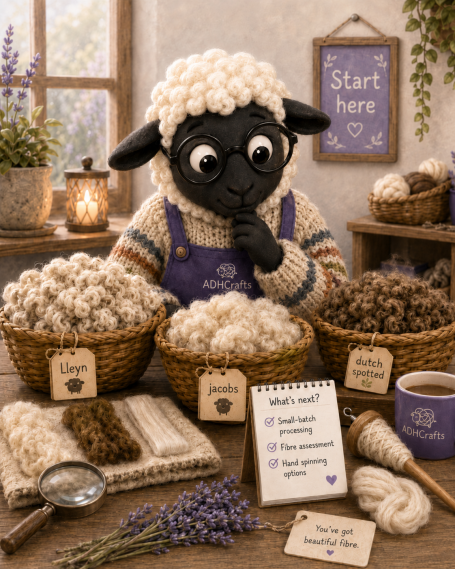
If you are unsure, you do not need to choose alone. ADHCrafts can help you decide what may be realistic after reviewing the fibre.
11. Related Guides
You may also find these pages helpful:
Ready to Choose a Processing Route?
If you are not sure whether your fibre should become yarn, batts, rolags, roving or something else, start with an enquiry.
Include clear photos, the approximate fibre weight, breed or animal details if known, and what you would like the finished fibre to be used for.

We need your consent to load the translations
We use a third-party service to translate the website content that may collect data about your activity. Please review the details in the privacy policy and accept the service to view the translations.